A strong foundation is one of the most important parts of any home — but in Texas, our unique climate and soil conditions can put serious stress on even well-built houses. Shifting clay soil, heavy rain, droughts, and Gulf Coast humidity all play a role in foundation wear and tear. Foundation Trouble Signs in Texas | All Coast Home Inspections
At All Coast Home Inspections, we’ve seen firsthand how ignoring small warning signs can lead to costly repairs down the road. Whether you live in Alvin, Angleton, Houston, Galveston, or anywhere in Brazoria County, it’s essential to know the signs of foundation problems and when to call in a professional.
In this guide, we’ll cover the most common foundation trouble signs, why Texas clay soil foundation problems are so common, and when it’s time to schedule a foundation inspection with a licensed home inspector.
Why Texas Homes Are Prone to Foundation Issues
The Gulf Coast region of Texas is notorious for soil movement. Much of our ground is made up of expansive clay soil. This type of soil swells dramatically when wet and shrinks when dry, creating constant movement beneath your home.
Over time, this movement can cause:
- Structural cracks in walls, ceilings, and floors.
- Shifting foundations that make floors uneven.
- Doors and windows that stick due to frame movement.
- Gaps around trim, crown molding, or exterior brick.
Houston and surrounding cities like Alvin, Angleton, and Galveston often see cycles of heavy rain followed by hot, dry spells. That repeated swelling and shrinking of clay soil is the leading cause of foundation problems in Texas homes. Home Inspection Services
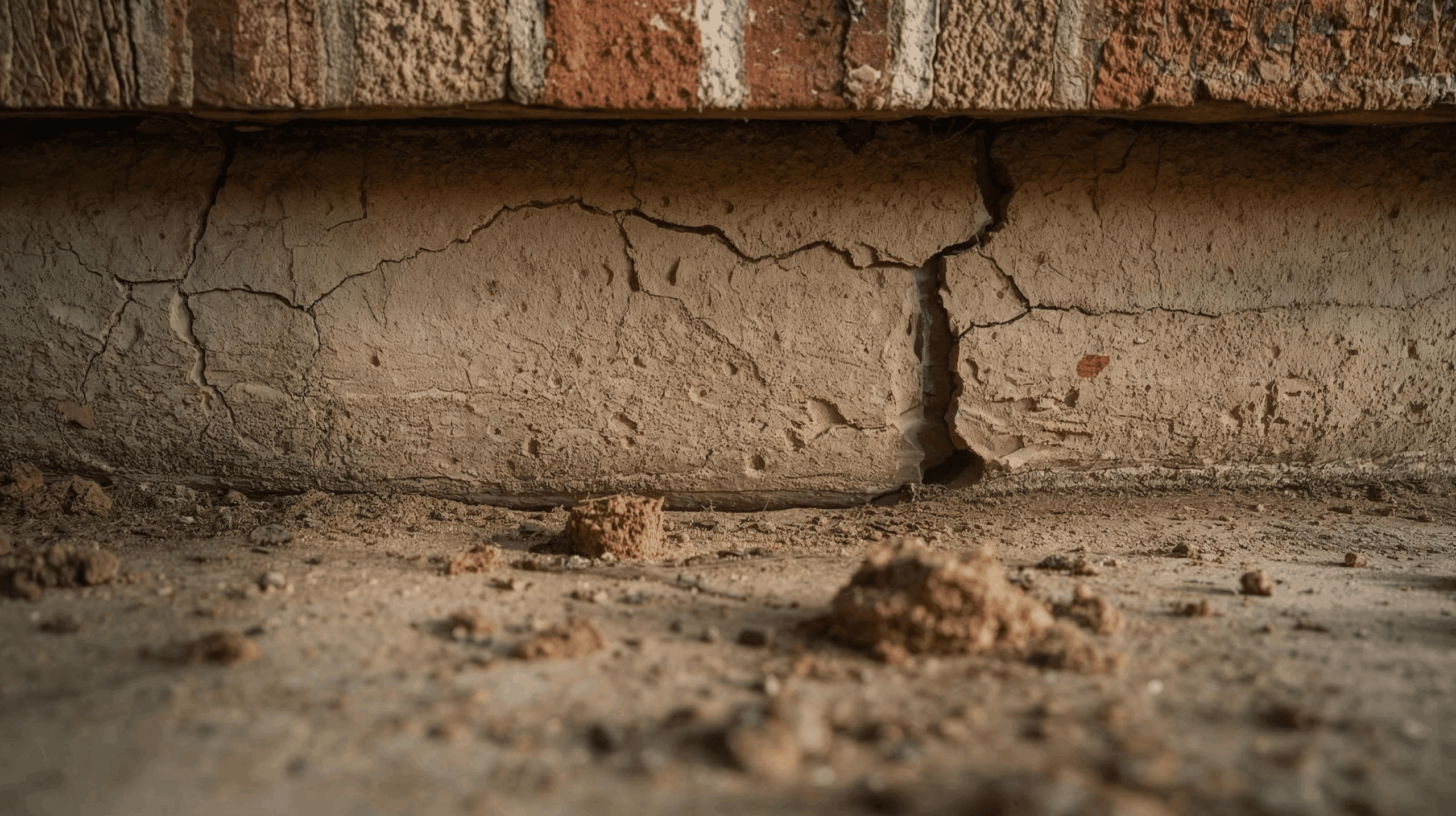
Trouble Sign #1: Cracks in Walls, Ceilings, and Floors
Not all cracks mean disaster, but certain ones can be early indicators of foundation damage.
Types of cracks to watch for:
- Diagonal cracks at door or window corners (often foundation-related).
- Horizontal cracks in brick or exterior siding.
- Wide cracks in concrete floors or garage slabs.
- Stair-step cracks in brick mortar joints.
Small hairline cracks in drywall are normal and can result from seasonal changes. But if cracks are widening, reappearing after repair, or running diagonally, it’s smart to schedule a foundation inspection with All Coast Home Inspections.
Trouble Sign #2: Doors and Windows That Stick
One of the most common complaints we hear from homeowners in Brazoria County is, “My doors won’t close right anymore.”
This happens because when the foundation shifts, the frames of your doors and windows become out of square. You might notice:
- Doors scraping the floor or frame.
- Windows that are suddenly hard to open or lock.
- Gaps forming around frames that weren’t there before.
These may seem like small inconveniences, but they can be an early red flag for structural shifts in your home.
Trouble Sign #3: Uneven or Sloping Floors
Have you ever dropped something round on the floor and watched it roll to the same corner every time? That’s more than a quirk — it’s often a sign of foundation settlement.
Signs your floors may be affected:
- Noticeable slope when walking across a room.
- Floor gaps at baseboards.
- Tile or wood flooring that cracks, separates, or buckles.
Uneven floors are especially common in homes built on Texas clay soil, and they’re a clear reason to schedule a foundation inspection. U.S. Geological Survey (USGS) – Expansive Soils
Trouble Sign #4: Gaps and Separations
Foundation movement often reveals itself in subtle separations around your home. Look for:
- Gaps where walls meet ceilings or floors.
- Separation between brick and trim.
- Chimneys that lean or pull away from the house.
These changes often happen slowly, but once they appear, they usually worsen without attention. Texas A&M AgriLife Extension – Soil & Foundation Guidance
When to Call a Home Inspector
Knowing the signs is only the first step. The next is knowing when to act. You don’t need to panic over every crack or sticky door, but here are times when it’s wise to call a professional:
- Cracks wider than 1/8 inch or that are growing.
- Multiple signs appearing together (cracks + uneven floors + sticking doors).
- Sudden changes after heavy rain, flooding, or drought.
- Peace of mind before buying or selling a home.
At All Coast Home Inspections, we provide detailed foundation inspections across Houston, Alvin, Angleton, Galveston, and Brazoria County. Our trained eyes can tell the difference between cosmetic issues and structural cracks that need attention. Foundation Trouble Signs in Texas | All Coast Home Inspections
Why Choose All Coast Home Inspections?
Foundation problems can be stressful, but you don’t have to navigate them alone. Here’s why Texas homeowners trust All Coast Home Inspections:
- Local expertise: We understand Texas clay soil foundation problems better than anyone.
- Experience you can trust: Serving Houston and surrounding areas since 2003.
- Detailed reporting: You’ll receive clear, easy-to-understand reports with photos.
- Peace of mind: We help you catch problems early, saving thousands in repairs.
Whether you’re a first-time buyer in Alvin, a long-time homeowner in Angleton, or managing property in Galveston, All Coast Home Inspections is here to protect your investment.
Protect Your Home’s Foundation Today
Your foundation supports everything else in your home — ignoring the warning signs can put your biggest investment at risk.
By watching for structural cracks, sticking doors, uneven floors, and gaps, you’ll know when it’s time to call a professional.
📞 Call All Coast Home Inspections today at (713) 494-3721
🌐 Visit us online at AllCoastHomeInspections.com
✉️ Email: acchinspections@gmail.com
Serving Houston, Alvin, Angleton, Galveston, and all of Brazoria County — one inspection at a time.